Showing posts with label good movies. Show all posts

Wednesday, July 5, 2017

When You're Sorry That It's Over: Captain Horatio Hornblower

Another film on my "sorry when it's over" list is "Captain Horatio Hornblower" (or "Captain Horatio Hornblower R. N.").  This is yet another vintage film I've enjoyed since childhood.  As a matter of fact, when I was a kid it was pretty vintage.  Granted, as enjoyable as the story is, there have been other films that have made me miss them more when "the end" appeared on the screen or the credits began to roll.  But, I still feel that hint of being choked up when a fun and endearing experience comes to an end.

"Captain Horatio Hornblower" was released in 1951, and starred Gregory Peck, Virginia Mayo, Robert Beatty, Moultrie Kelsall, Terence Morgan, James Kenney and James Robertson Justice, and directed by Raoul Walsh.  This film, in particular, was based on one of a series of novels by C. S. Forester about the service and life of the fictional character Horatio Hornblower.  The series follows his career from midshipman to admiral and beyond.  The title of the novel on which the film is based is "Beat to Quarters".  (I had to read that when I was in school.  Much to my surprise, it was really good.  Even though I enjoyed the movie, I never expected the book to be as good.  Not even a little bit.  Needless to say, the surprise was a pleasant one.)  Having seen the movie before reading the novel served to enhance the reading experience for me.  I always enjoyed the aire of 1950's swashbuckler films.  They always had something of a call to the escapist in me.  The experience of the film bled over into the novel.

"Captain Horatio Hornblower" had what I would call a "larger than life" feel to it.  From the very beginning, you're pulled right into the story.  You're narrated right from backstory and setting to the present, which is a tall ship being towed across a windless sea.  The movie starts out with a ship, the H.M.S. Lydia, in dire straits and with a grim outlook, literally on the other side of the world, attempting to carry out secret orders.  Little by little the details of the orders and mission are revealed as the grim situation aboard ship plays out.  The first thing that's shown is the nature of the captain and his command.  Captain Horatio Hornblower shows himself to be a staunch advocate of naval regulations and a fierce supporter of the authority of his officers.  But, at the same time, he manages to be something of a secret advocate of the rest of the crew as well.  This can be seen when, in the opening scenes of the film, Captain Hornblower orders the crew assembled to witness the punishment of one of the crew reported for fighting.  As the crewman is being punished, the captain reveals to the reporting officer, Mr. Gerard, the real reason why the crewman is being flogged.  All at once the strict commander with a genuine concern for his crew.  This serves to endear Captain Hornblower as a character.  In fact, his mindfulness of the crew continues throughout the film.  And it's answered by the crew's growing respect for him.

The officers of the H.M.S. Lydia have a kind of chemistry of their own.  Particularly the first lieutenant and the navigator, Mr. Bush and Mr. Crystal.  After sharing their alarm over the growing amount of time the Lydia remains becalmed, the captain joins their conversation and, in his way, reassures them with a prediction of their reaching wind and, within days, reaching their destination.  A very specific destination which he describes in some detail.  Mr. Crystal's skepticism and Mr. Bush's confidence provide the fuel for their amusing relationship during their service aboard the Lydia.  It begins with a wager between them over whether or not the captain's prediction of towing into wind and reaching their destination will see fruition.  For myself, this and consequent wagers between them, and seeing who wins, provides a measure of comedy as the story plays out aboard the Lydia.

With the reaching of their destination (as well as the final revelation of the nature and details of their overall mission in the Pacific), the captain meets the ally of the British monarchy Don Julian Alvarado or "El Supremo", as he calls himself.  This guy is the perfect picture of ego nurtured into madness.  Where this guy is concerned, the words "delusions of grandeur" just don't quite say it.  Though it's pretty much by suggestion only, looking into this guy's eyes and listening to him talk, there's clear indication that his brutality matches his madness.  "El Supremo" is the perfect picture of a frail, all-demanding ego that requires support and justification through ruthless brutality.  Just the same, Capt. Hornblower handles him well.

Captain Hornblower's meeting with "El Supremo" marks the beginning of the first of the two great adventures in the film.  Captain Hornblower comes away from his first meeting with "El Supremo" having accepted the task of capturing the "Natividad", a 60-gun ship of the Spanish line that has been sent in answer to "El Supremo's" revelation of hostility to the Spanish.  This ship, the Natividad, out guns and out mans the Lydia.  She is, for all intents and practical purposes, as far as the Lydia is concerned, undefeatable.  This makes her the center of focus for this part of the film.  Captain Hornblower, of course, has a plan to capture the Natividad, which he and the crew carry out quite successfully.  But this isn't the high point of this particular adventure.  This only opens the door to the twist in the relationship between Captain Hornblower and "El Supremo", and, what turns out to be the high point and climax of this adventure.

After having turned over the captured Natividad to "El Supremo", Captain Hornblower takes the Lydia south to blockade Panama against the Spanish as a part of his ordered assistance to "El Supremo".  En route, he encounters a Spanish lugger flying a white flag and bringing news and passengers that change everything.  The Spanish captain brings news that before Captain Hornblower could even begin his mission in the Pacific, the tide of the war in Europe had changed and Spain was now allied to England.  With this news came the realization that the most powerful weapon in those waters was now in the hands of a brutal madman bent on conquest.  And to make matters worse, Captain Hornblower finds himself forced to take on two female passengers, the Lady Barbara Wellesley, a member of English nobility, and her maid, as they head out to find and engage the most heavily armed ship that side of the world.  A tiny bit of mayhem and controlled chaos ensues.  

The second encounter between the Natividad, now under the command of "El Supremo", and the Lydia began with the revelation of the loss of the element of surprise on the part of the Lydia.  This is announced by a cannon shot from the Natividad once the ships have sight of each other.  To the officers and men of the Lydia, the outlook of the impending battle is grim.  They charge ahead against a ship twice the Lydia's strength.  "El Supremo", with all the rage of his bent, power-obsessed ego, charges ahead in all the wind the Natividad's sails can carry.  This puts her gun ports underwater on one side.  This is an opening that no one but Captain Hornblower anticipates.  Here begins the excitement as, with a quick maneuver across the Natividad's bow, the Lydia passes on the side of the Natividad that's listed into the water and, as her guns bear, unloads a full cannon volley into her without a single shot returned.  And then, if that's not enough, being the more maneuverable ship, the Lydia manages to turn around, overtake the Natividad, and put another volley into her before she can return fire.  Everyone is shocked.  "El Supremo" is livid.  (And I'm tickled to death.  I can never get enough of this battle.)

The Lydia's advantage having been exhausted, she turns to face the remaining fury of the Natividad's guns.  Mr. Bush, the first lieutenant, after singing Captain Hornblower's praises for his achievement against the Natividad, expresses his satisfaction with the well exploited advantage, "For what we are about to receive may we all be truly thankful."  This is followed, in short order, by a broadside from the Natividad.  And from this point on, it's a violent pounding match, escalating from passing shots as guns bear to a broadside facing firefight.  Despite her strength, the Natividad was unable to recover from the Lydia's fire as quickly and effectively as the Lydia could from her's, and, in the confusion of trying to recoup from the Lydia's fire, "El Supremo" meets his end trapped beneath a fallen cannon.  The Lydia ceases fire and the crew stand and watch as the Natividad burns, her hull being ripped apart as the powder magazine explodes.  A victory well earned.

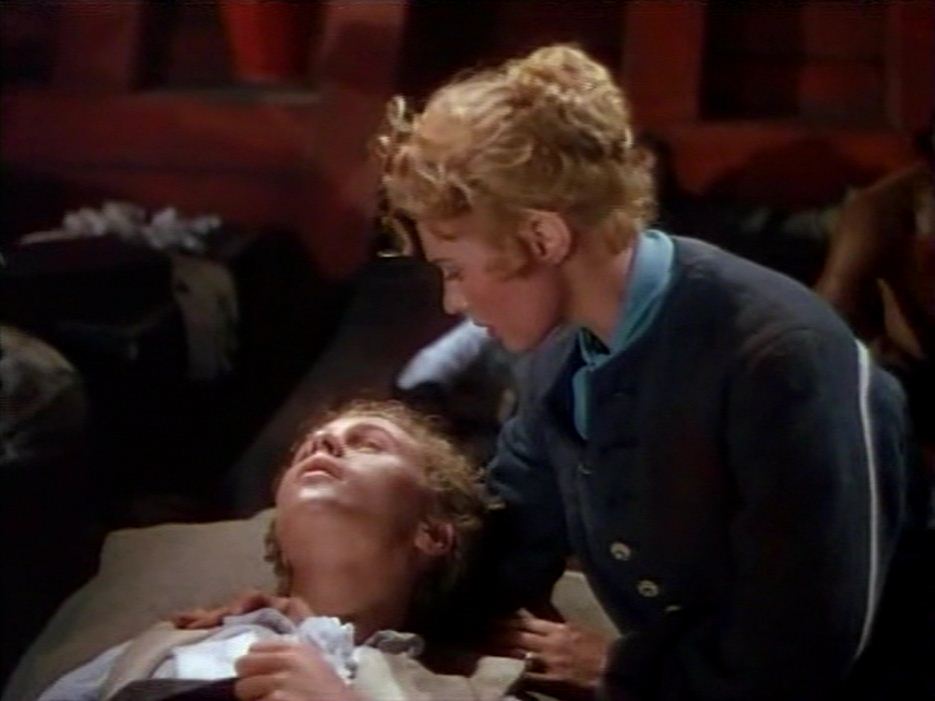
The Lady Barbara Wellesly proved herself in the heat of the Lydia's battle against the Natividad.  When the fighting began and the wounded started to pile up, with the death of the surgeon, the Lady immediately went to work tending the wounded.  After the battle, Captain Hornblower found the Lady tending the mortally wounded midshipman, Mr. Longley.  Again, the captain's mindfulness of his crew is seen as, in a cloud of delirium, Mr. Longley sees his mother in the Lady Wellesly and asks her to kiss him goodnight as his mother did when he was a child.  The Lady had no idea what to do.  The captain deduced how this was done from his observation of how Mr. Longley's mother kissed him goodbye when the Lydia left England.  This, the captain's attendance during Lady Wellesly's illness, and the events of the long journey back to England served to nurture the Lady's feelings for Captain Hornblower.  And, despite the most noble of efforts, those feelings were not unrequited.  The fact that the captain was married, and the Lady herself was engaged to Admiral Rodney Leighton, one of Captain Hornblower's superiors, pretty much put all the nails in the coffin of whatever hope there might have been for their feelings for each other.  The awkwardness of the situation aboard ship
motivated Captain Hornblower to drive the Lydia as hard as he could to get back to England as quickly as possible.

Immediately upon their arrival back in England, the Lydia is boarded by Admiral Leighton himself, in the retrieval his fiance.  The moment this guy opened his mouth, I couldn't stand him.  His every word filled me with rage.  And it got worse the more he talked.  His criticism of Captain Hornblower's handling of his mission and his dismissal of sinking of the Natividad as "luck" just pissed me off.  I wanted to choke him.  My first thought was that this was nothing but jealous spite.  His continued behavior served to confirm me in that opinion.  I really hated this guy.  It almost made my flesh crawl when it turned out that Captain Hornblower would be serving under him as one of the captains in his squadron in the next mission.  And, in an act of crowning stupidity, he orders Captain Hornblower to take no initiative and not to risk his ship in anyway, effectively hobbling him in the execution of his part in the squadron's mission.  (Poor Lady Wellesly.)

In the interim between adventures, he briefly visits home only to find that his wife has died giving birth to their son.  This is coupled with the news that the woman he has fallen in love with is now married.  It just keeps getting heaped onto when, being attached to Admiral Leighton's squadron, he's operationally hobbled in the carrying out of his mission.

At the beginning of the second great adventure of the film, Captain Hornblower shows a clearly superior understanding of the theatre of campaign by poking holes in the admiral's strategy for tracking down four ships escaped from Admiral McCartney's blockade.  Despite Admiral Leighton's attempt to hobble Captain Hornblower, he manages to find out that his understanding of the situation in Europe and Napolean's strategy is correct and successfully tracks down the four escaped ships.  He also manages to take advantage of the fact that the ship he's been assigned is a captured enemy ship retasked to serve the English fleet.  Running across a small cargo ship serving the enemy, Captain Hornblower learns from her captain the enemy recognition signal.  With this, he manages to find and sneak into an enemy port and surprise them, masquerading as an enemy ship.  He manages to sucessfully dismast and cripple all four ships in the face of superior firepower coming from the fortress connected to the port.  But, he does this at the cost his ship.  Even still, he manages to put his ship at the mouth of the harbor, sinking it in a position that would effectively cut off the port from the rest of the sea, trapping any ship large enough to be a problem in the harbor.

Captain Hornblower succeeds in his mission at the cost of his ship and the capture of himself and his crew.  Fortunately, however, the detail he sent aboard the captured enemy cargo ship found the rest of Admiral Leighton's squadron and apprised them of Captain Hornblower's intentions and subsequent location.  Shortly after Captain Hornblower and his crew are incarcerated, Admiral Leighton's squadron arrives and attacks the fortress.  Captain Hornblower and his first lieutenant, Mr. Bush, however, are taken from the fortress and sent on their way to Paris to face trial and execution.  With the help of crewman Quist, who, rather forcefully, volunteers himself to assist the injured Mr. Bush during their journey, they make their escape, following a nearby river to a port.  On their arrival at the port, they recognize a well known ship, the "Witch of Endor", anchored there and make plans to try and take her.  After appropriating a suitable disguise from a trio of "obliging" Dutch officers, they fortuitously happen across a prison detail made up of English POWs.  After having secured the ship, Captain Hornblower, fluent in French, gets the guard to have his detail of English prisoners help them get the Witch of Endor away from the port.  The moment the ship is untied, the captain invites the prisoners to take their guards and toss them over the side.  They happily accept.  From there, Captain Hornblower and his new crew of rescued English prisoners make their way back to England.  Their arrival at an English port to great celebration at a successful return and cheerful goodbyes mark the end of the second adventure of the film.

Though the end is rather predictable from the point of their return to England, it's no less fun to watch and satisfying to see.  That there's more to the story is suggested by the summons to London delivered by Lord Hood with the intimation of a possible knighthood.  The end of the story is pretty easy to see well before the words "The End" appear on the screen.  But, everytime I watch it, I still feel sorry that it's over.

Monday, June 26, 2017

Something I Should Explain Before I Start Talking About Movies Again

When it comes to movies, I think there's something that I should explain.  Whether it's actual professional movie critics, or just people I happen to get into a conversation about movies with, I don't rate films the same way as others.  Most people have there own system for evaluating films, typically suited to there own tastes.  My thinking is that in some form or fashion this is most likely true for everyone.  (It's just that I frequently hear people discussing movies in what I would consider to be "technical" terms.  I hear a lot of discussion about the respective ability and quality of the work of individual actors, the qualities, features, and direction of stories, techniques of directors, etc., and, for myself, these things are not the criteria by which I evaluate a film.  Sometimes, these factors may be involved in my appreciation of a film, if said factors are profound enough, in one way or another, to affect my personal experience in watching the film.)  For myself, I typically judge a film on the basis of what I experience as I watch it.  What or how I feel.


I've seen interviews where people discuss what it was like for them (usually as children) to go to the movies.  Hearing them talk about their experiences, you don't here them talking about lighting, or story, or some other such technical characteristic.  You hear them talk about what they felt.  You hear them talk about how they became attached to the "hero", or truly dispised the villian.  You hear them talk about how the film made them forget about their troubles for a couple of hours.  These are my reasons for watching films.

Now, apart from the usual instances where they directly speak to the experience of the film, there are occasions on which certain "technical" characteristics may stand out to me.  Sometimes the cinematography may so profoundly contribute to the beauty of a film that mentioning it simply can't be helped.  When it contributes to and enhances the telling of the story, when it goes so far as to "color" a point of view of a
character in the film, you can't help but bring it up.  Sometimes the special effects techniques in a certain film may so contribute to its quality that it simply cannot go without notice or mention.  And, sometimes, the story can be so good, the quality of the film's other characteristics become irrelevant.  The thing is, it's about the experience.


It has also occurred to me that I should mention that, again, for myself, there is a certain . . . do I want to call it a "standard"?  No, I don't think so.  Well, to put is simply, with respect to any movie I might care to discuss, there's a simple motto I go by.  It's the same one that determines whether or not I purchase a film, or just rent it out of curiosity, see it, send or take it back and forget about it.  "If I don't want to watch it repeatedly, I don't buy it."  I don't see much point in owning it if I'm not going to watch it again.  And again.  And again.  And, in like fashion, if I'm not going to watch it again, I don't see a lot of point in discussing it (outside of entertaining the curiosity and preferences of others who think differently).  If I end up discussing a film I wouldn't see again, it usually turns out that I don't have much to contribute to the conversation (unless I really didn't like it).  Suffice it to say, there won't be much in the direction of commentary on films that did nothing for me.  I mean, after all, like I said, for me, it's about the experience.  And if there wasn't any, then, there's not really much of anything to talk about.

That being said, it'll be safe to assume that any movie discussed here will have been seen a number of times.  So, this is not about new releases.  Not about new releases!  For all intents and practical purposes, it's about old movies (movies that have been already released and have made the box office rounds).  Not necessarily vintage (though one or two may be included), but, movies that have been seen (by just about everyone) nonetheless.

So, if you're looking for something in the direction of an actual critique or something on new releases, what follows may not be for you.

Wednesday, May 22, 2013

Movies You Should Watch Before Suicide: Gran Torino

Once while looking up a film on a well known movie site, I stumbled across a list of films with an interesting and unusual title.  It was called "Before You Wanna' Commit Suicide, Watch These First".  Now, those who know me know that I'm just odd enough to actually give some level of literal consideration to a title like this.  Of course, as was indicated by the author of the list, there was no serious thought given to the actual taking of one's own life or any other actual consideration of death.  It was just an unusual attempt at a creative title for what amounts to a "movie bucket list".  This list was an assembly of 692 films that the author of the list believed were of such quality that seeing them could qualify as some fashion of "life goal".  Long story short, a list of really, really good movies.

But, the thing is, me being me, I just couldn't resist thinking about the title of the list in a literal sense.  Just for kicks, mind you.  Now, for myself, I had to consider my personal taste in films.  The list was, by my standards, rather large and diverse.  So, my first move was to trim the list down to just the titles that appealed to my taste.  When I was done, I had a list that was only a fraction of the size of the original list.  Next, I considered the list that I gleaned from the original list in the context of the title of said original list.  My list got even smaller.  What I ended up with was a list of films that I thought would have a considerable influence on my state of mind if I were actually considering ending my own life.  I thought it could make for an interesting review.  

The 5th film in my list of films to see before I considered ending my life was "Gran Torino".  This film was released in 2008 and starred Clint Eastwood, Christopher Carly, Bee Vang, and Ahney Her.  Walt Kowalsky, after burying his wife, simply wants to be left alone.  An angry, very unhappy Korean war veteran, steeped in the war-born prejudices of the fifties, finds himself brought face to face with the dangerous realities of the neighborhood he raised his family in and has been living in since his return from Korea.  Along with the arrival of his new Hmong neighbors, he's also forced to deal with his strained relationship with his sons and their respective families.  Then a young Hmong teen from next door breaks into his garage in an attempt to steal his 1972 Gran Torino.  When this same teen is harassed by a Hmong street gang, Walt chases the gang members away when the harassment spills over on to his lawn.  Having inadvertently saved the young teen from being taken away by the street gang, he becomes, for all intents and practical purposes, a neighborhood hero.  And, when the young teen's mother and sister get Walt to allow him to make up for the attempt to steal his car by working for him for a couple of weeks, he becomes friends with the young teen, Tao, and his sister Sue.  It is at this point that he undertakes to get Tao started on a better path and wrest him from the grip of the Hmong street gang harassing him to join them.

This was what I would call a very uncomplicated story.  The center of this story was the relationship that developed between Tao and Walt.  The bond that formed between them seemed so terribly unlikely in light of Walt's prejudices.  Walt was a fifties era Korean War veteran.  He was hard, unhappy, and had less than no problem at all speaking his mind.  And he did so in the unmistakable fashion of a hardened soldier.  Tao was a young impressionable Hmong teen.  He was quiet and relatively unassertive, much to Walt's chagrin.  I thought that the relationship and bond that formed between him and Tao was about as unlikely as it could be given the circumstances.  Watching it grow throughout the film was inspirational.

Tao's sister Sue was a piece of work.  She was bright, intelligent, and what some might call "sassy".  She was able to see that, in spite of all the racism, underneath that gruff exterior, Walt was a good man.  Her ability to befriend Walt in spite of his demeanor was endearing.  She was the bridge between Walt and the rest of her family.  Through her Walt learned about her family, her people, and where they were from.  And, she was so able to take Walt's rough, inappropriate, comments in stride.  And she could give as good as she got.  Walt couldn't help but admire her.  She was strong and courageous and had no problem calling out wrong when she saw it.  She and her family came to mean a great deal to Walt.  As a matter of fact, he found himself able identify with Tao and the rest of her family better than he could with his own.

Clint Eastwood made the character of Walt Kowalski all his own.  In his first appearance on the screen, his face almost said it all.  His contempt for his own family wrote itself across his face.  And when he spoke, it became more and more evident with each successive word.  I found myself amused by Walt's expletive laced, racist comments largely because he made them as though he was completely
ignorant of how vulgar and inappropriate they were.  It was like the horrible and embarrassing comments he made were a matter of ordinary, everyday conversation.  It was my own knowledge of the "political incorrectness" of the things he said, coupled with his apparent ignorance of how off-color his comments were that made me laugh.  And when he found himself socializing with his Hmong neighbors, he couldn't pronounce anyone's name right.  And it was almost like he didn't care.  Not so much that he thought poorly of the family.  As I said before, he identified with them better than he did with his own family.  It's just that he knew that he was never going to get it right.  He knew the effort was pointless and, being who he was, his attitude was like "yeah, whatever."  Those that grew close to him learned to just accept it as a part of who he was.  He was set in his ways and those closest to him understood and accepted that about him.  A feat his own family was unable to pull off.

His interaction with the Hmong family as well as his efforts in the guidance of Tao endeared him (to some extent) to them all.  Especially to Tao and Sue.  Almost from the beginning of the movie, we are made aware that he is becoming ill.  Sue is among the first among the Hmong to realize that something is wrong.  When she asks him about it, he lies to her to put her off her concern.  His illness shows itself to Tao shortly thereafter and he too is not-so-easily put off his concern.  As his condition grows worse he is finally driven to seek medical attention.  Though it is never discussed, a grim fate is suggested by the test results he got back from the doctor's office.  When the Hmong family residence is attacked and Sue is assaulted, Walt makes a decision that not only gives him personal peace, but, provides a solution for his young friends and their family and puts an end to their troubles.

With respect to the difference between an escape film and an inspirational film, I'd have to say this was definitely inspirational.  I couldn't call this an escape movie of any kind.  It deals with very real problems that young people and their families have to face and deal with.  Problems that make the news on pretty much a daily basis.  But, out of the midst of the violence, this film paints a picture of friendship and bonding between people on opposite sides of age, cultural and ethnic lines that some might think impenetrable.

Now, if I were to think of this film in the context of something that I'd like to see before I end my existence in this world, I don't know if I would change my mind.  I'm inclined to think that, having seen this film, I might be inspired to find a way to make my passing of some use to someone.  Perhaps in some kind of self-sacrifice in the interest of someone important to me.  I might find some encouragement in the thought that perhaps I could find some peace in ending my life, but, I'm not too sure I would find the inspiration to change my mind.  Don't get me wrong.  I thought this was an awesome movie.  Worthy of anyone's "movie bucket list".  But, I think, for myself, at least, it would only serve to facilitate my search for peace in the decision to "end it all".  The end was sad, but, at the same time, triumphant.  Enough to end everything on a melancholy but pleasant note.        

Monday, March 18, 2013

Movies You Should Watch Before Suicide: Sense and Sensibility

A little while ago I came across a list of films that were identified as "movies that should be seen before you commit suicide" (or something like that).  That wasn't the exact title of the list, but that was something of the idea.  It didn't really involve suicide or anything like that.  It was just a really unusual title for what amounts to a "movie bucket list".  I didn't see every film on the list, but, from what I could gather of the films on the list that I did see, it really was a list of particularly good movies. 

The author of this list really caught my attention with its title.  And, being the odd fellow that I am, I actually gave it some thought.  I mean, just as the title suggested, I thought about what movies I'd want to see before ending my own life.  (Those who've known me best know taking a title like that seriously would be just the kind of thing I'd do.)  I thought to myself, "If I were serious enough to want to end my own life, what movies would I want to see?"  There were 692 titles on the list.  Of all the films that I have seen, and of all those that I consider "favorites", there aren't 692 movies.  So, I had to narrow the list down.  Significantly.  Even of my favorites, there are only so many that I would give that serious a level of consideration.  Needless to say, my list is considerably smaller. 

The third film that I included in my own list was "Sense and Sensibility".  This particular version of the film was released in 1995, and was directed by Ang Lee.  It starred Emma Thomson, Kate Winslet, James Fleet, Hugh Grant, and Alan Rickman.  At the death of husband and father, Mr. Dashwood, Mrs. Dashwood and her daughters find themselves in financial straits.  In Georgian England, by law, daughters cannot inherit, and Mr. Dashwood's estate cannot be divided between his son and his wife and daughters (the impression is given that Mrs Dashwood is Mr. Dashwood's second wife [or at least, a wife succeeding his eldest son's mother] and that the inheriting son is from the previous wife).  With the residence being claimed by the eldest son and his wife, Mrs. Dashwood and her daughters must find somewhere else to live.  Taking advantage of a timely offer of alternative residence, Mrs. Dashwood and her daughters must contend with the well-meaning but indiscrete Sir John Middleton and his mother-in-law, Mrs. Jennings.  In the course of acquainting themselves with the ambient society, the two eldest daughters encounter prospective suitors who's situations are more complicated than they first appear.   

One of my favorite things about this film is the pastoral feel it has.  This was one of the qualities that made this film a pleasure to watch.  Another was the way you found yourself caught up in the characters.  All of them seemed to provoke what one might consider to be a rather profound reaction respective to each of the characters and what they were like.  For myself, whatever feelings I developed for the characters, good or bad, were rather strong and engaging.  Their personalities seemed pronounced.  For example, Elinor Dashwood, though quite level-headed, practical and disciplined, was what I would call compassionate to a fault.  She always seemed to put everyone else's welfare before her own.  And she gave everyone the benefit of the doubt.  But, not to the point of denial.  She had the clarity to see what was really in front of her and not what she or others might have wanted to see.  I found myself feeling for her as she accepted the impossibility of a relationship and life with her sister-in-law's brother, Edward, who had pretty much endeared himself to Mrs. Dashwood and all three of her daughters and become the object of Elinor's affections.  Elinor was the family planner and organizer.  She, very effectively, ran the household for her mother and sisters. 

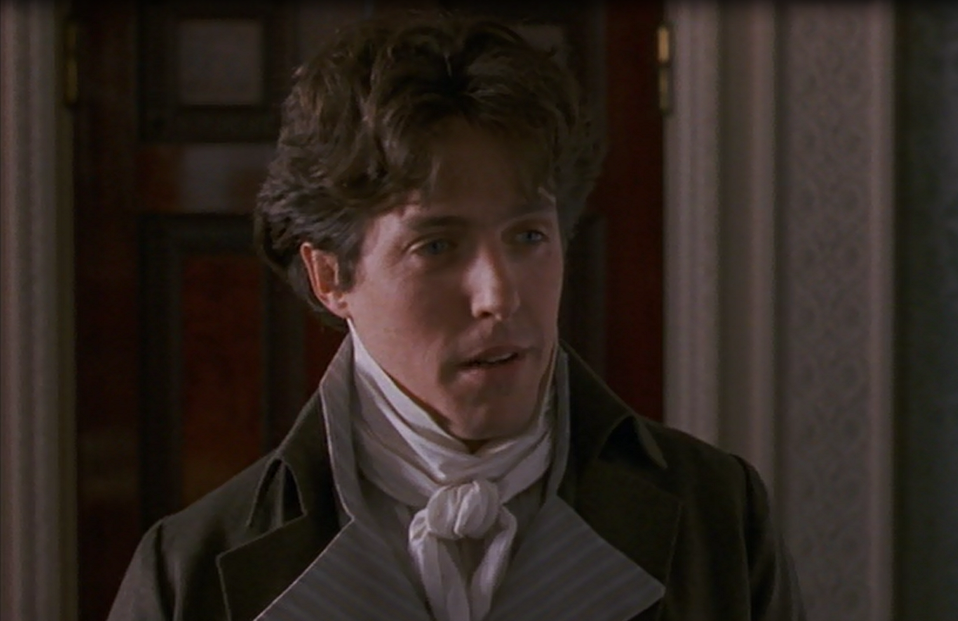
Then, there was Edward Ferrars.  I liked him instantly.  When Fannie, his sister, made an excellent show of just how inconsiderate she was by asking Mrs. Dashwood to move one of her daughters out of their room for the sake of the view, Edward corrected the situation by having himself moved into the guest quarters.  And this, after immediately showing himself sympathetic to the situation Mrs. Dashwood and her daughters found themselves in.  He immediately bonded with the youngest of the Dashwood daughters upon meeting her.  As I mentioned before, Edward thoroughly endeared himself to Mrs. Dashwood and her daughters.  It wasn't long before everyone began to notice the bond that was forming between Edward and Elinor.  Much to Mrs. Dashwood's delight and Fannie's dismay.  Edward was possessed of great integrity, which, unfortunately, would work against their being together. 

Fannie and John Dashwood were not exactly on my favorites list as a couple.  I had some hope for John at first as his initial intention, prompted by his father's dying wish, was to render significant aid to Mrs. Dashwood and her daughters.  But, his wife, Fannie, skillfully and successfully talked him down from his offer and nearly convinced him that he would be justified in seeking remuneration from them.  Fannie, on the other hand, drew contempt from me almost instantly.  Her profound lack of compassion and her sickening sense of superiority almost turned me sideways.  While her outward behavior was possessed of the generally expected and accepted graces exhibited by the ladies of Georgian English society, her disdain for those possessed of less wealth than herself and her self-justified snobbery simply gushed from her like sludge from a flooded sewer drain.  I found no redeeming qualities in her at all. 


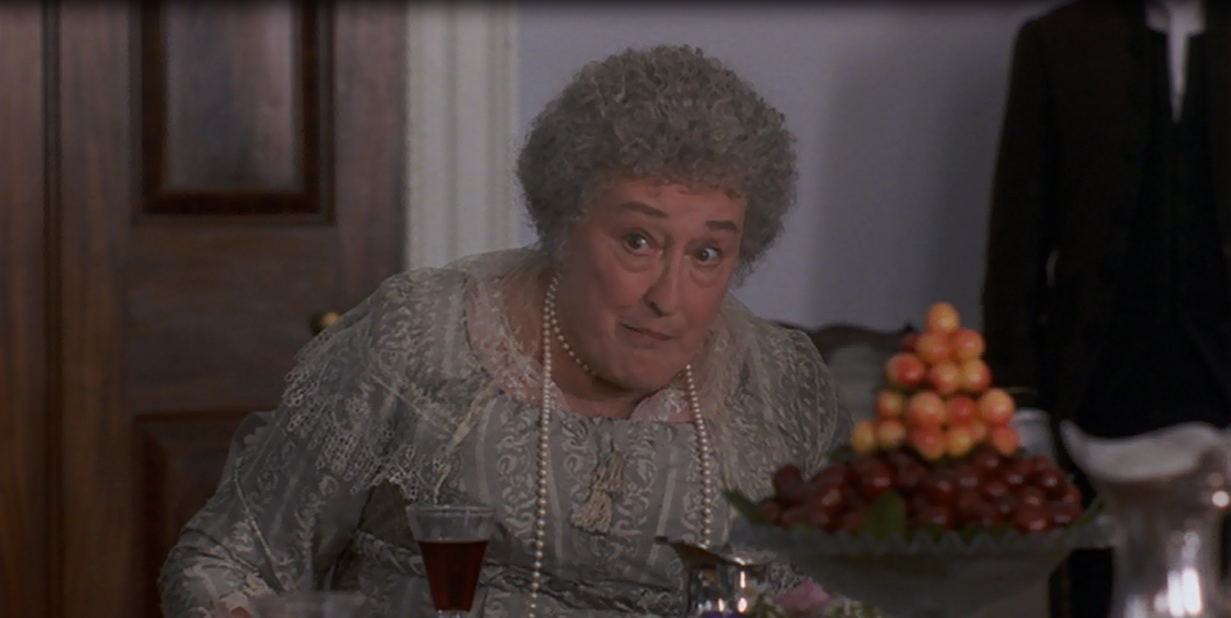
Sir John Middleton and his mother-in-law, Mrs. Jennings, were charming enough despite their respective lack of tact.  Though they were rather tact and discretion challenged, I found them particularly amusing.  They were very generous at heart and well-meaning.  Sir John was a generally pleasant fellow and seemed to be a very good conversationalist.  The only shortcoming I found in him was his lack of discretion.  As much as I liked him, I found myself cringing from time to time at the things he would bring up, seemingly out no where, in conversation.  Mrs. Jennings was also rather kind and well-meaning.  She was quite nosey and a bit of a meddler, but she was quick to help and comfort when and where ever she could.  She too, like Sir John, was very amusing.  Both of them so much so, in fact, that it was quite easy to overlook their social flaws.  I kind of got the impression that they were somewhat aware of their social flaws, but just didn't care. 


Col. Christopher Brandon was a character I found myself relating to a bit more than any of the others.  Upon first laying eyes on Marianne Dashwood, he was smitten.  But he understood that in the eyes of ambient society, to say nothing of the eyes of Marianne, he was considered to be something of an older man, by all appearances just shy of middle-aged.  I thought he was a pleasant fellow but very reserved and serious.  Col. Brandon had a past that he was not particularly proud of, though, from what I could tell there was nothing in it of which he himself should've been ashamed.  Nevertheless, Col. Brandon saw himself as someone that Marianne should have only as a casual acquaintance.  Though quickly developed, his feelings for Marianne seemed quite genuine and his only wish for her was her happiness.  And, he would see her happy regardless of the circumstances of that happiness.  He didn't care that he could never be an active part of it.  He could accept that, as long as he knew she was happy.  Nowhere in this film was Col. Brandon's love for Marianne more evident than when she fell ill.  His fear for her life and sense of helplessness nearly consumed him.  In the course of caring for Marianne in her illness, Elinor stumbles upon Col. Brandon outside the bedroom door.  Seemingly overwhelmed with fear and anxiety, he asks what he can do.  As she tells him that he's already done so much for them, he just about cuts her off with what has become my favorite line in the whole movie.  "Give me an occupation Miss Dashwood, or I shall run mad." 


Marianne Dashwood had her own ideas about what love should be like and who would make the ideal candidate for that love.  She was an avid believer in burning passion.  She was of the opinion that any love worth having should be unbridled and careless of propriety.  And, she believed in living up to that ideal.  At least, for herself anyway.  She found that ideal met in the form of John Willoughby.  Having scooped her up and carried her in his arms all the way back home from a fall suffered on an inadvisable stroll in the rain, Mr. Willoughby found himself endeared to Mrs. Dashwood and all of her daughters.  Marianne fell for him instantly.  Being much in each other's company, Marianne Dashwood and John Willoughby seemed very much like a deliriously happy couple.  However, by virtue of a dubious turn of events, it turns out that, to all except for Marianne, Mr. Willoughby is not quite the charming young man everyone is at first led to believe.  This is revealed in some detail when Mr. Willoughby's past behavior indirectly crosses the path of Col. Brandon. 


There were other contributing characters to the story with somewhat less involvement that were just as engaging as those around whom the greater majority of the film is centered.  Miss Lucy Steele, for example, who is a significant part of Edward Ferrar's past and, who, despite her apparent charm, turns out to be something of a schemer.  Mr. and Mrs. Palmer, daughter and son-in-law to Mrs. Jennings, were a bit comical in their own way both as a couple and as individuals.  As a couple they were exact opposites of each other.  She was annoyingly, incessantly, chipper and chatty.  He was sullen, moody, and a man of few, unpleasant words.  And then there was Robert Ferrars.  If you thought Fannie was a snob, you were in for a real treat with this guy.  If you looked up "snob" in the dictionary, you'd see this guy.  As a matter of fact, from all that is revealed about them, the only redeeming quality about the entire Ferrars family is Edward.


The pleasant reverses and lessons learned make this film one worth seeing in a state of mind that might involve the end of one's life.  I would put this in the category of an escape movie as this is definitely something that would take one's mind off of one's troubles for a couple of hours.  As for the aforementioned state of mind, for myself personally, I might find enough enjoyment in this movie to change my disposition.  I would recommend this film to just about anyone.  If you enjoy a good story with engaging characters, this will definitely serve to take the edge off.


Wednesday, February 20, 2013

Movies You Should Watch Before Suicide: Pride and Prejudice


While I was on a frequented website, I came across a list of films that were described as movies that one would want to see before committing suicide.  It wasn't really about committing suicide or anything of the sort.  It was just a really emphatic way of describing what you might call a "movie bucket list".  This was just a list of what was, in the opinion of the author of the list, some really, really good movies that you really should see, presumably before leaving this life.  Now, with so grave (no pun intended) and expressive a list of films, for myself, I had to narrow down the list a bit.  The list featured 692 titles.  (I like movies as much as the next person, but, I don't have quite that many favorites.  In fact, I'm not sure if I've actually seen 692 movies.) 

Being the "over thinker" that I am, and having the predilection for the strange and unusual that I do, I actually put to myself the question: "What movies would I like to see if I were contemplating ending my life?"  Asking myself this question, I set about the task of narrowing the list.  The second film from this list that I chose was "Pride and Prejudice". 

The film "Pride and Prejudice" was released in 2005, and directed by Joe Wright.  The film starred Keira Knightley, Talulah Riley, Rosamund Pike, Jena Malone, Carey Mulligan, Donald Sutherland, Matthew Macfadyen, and Brenda Blethyn.  The focus of this story is young Elizabeth Bennet, a strong-willed, vibrant young woman living in the caste driven society of Georgian England.  The second of five daughters born to a lower class family, she must contend with a mother who's singular obsession is to marry off all of her daughters.  With her own rather well developed opinions about men and love, she finds herself feeling justified in her beliefs when she meets Mr. Darcy, a man governed by traditional prejudices held by the wealthy of Georgian English society, and the wealthy best friend of the visiting Mr. Bingley, a man of apparently moderate wealth himself.  But, things become complicated when Elizabeth's older sister, Jane, falls in love with Mr. Bingley, a turn of events which brings her into further contact with Mr. Darcy.  In the course of her encounters with Mr. Darcy, she discovers that her understanding of men and love is not as accurate as she first believed.  In fact, all that she believed about Mr. Darcy wasn't entirely accurate.  She slowly discovers that there is more to Mr. Darcy than what she concluded from her first impression.  And so does her heart.    

"Pride and Prejudice" is a film that I would classify as an "escape" movie.  Though it's a story that takes place in the setting of a caste driven society, as this particular version of the film portrays it, there is a level of innocence shown here that, compared with life as we know it, whether in history or the present, seems almost surreal.  The way the characters interact with each other, the traditional courtesies, and the language that everyone uses all have an elegance about them that fascinates me.  In the film, one of the Bennet daughters, Mary, made what amounted to an out-of-place comment and drew from Elizabeth the most elegant way to tell someone to shut up that I've ever heard.  It was awesome.

I don't know about anyone else, but I was kind of caught up in the characters and how they interacted with each other.  I mean, even when they were angry with each other, the exchanges were elegant, eloquent and passionate.  Everyone seemed so straightforword and uncomplicated in their feeling and expression.  I was entranced.  It just sucked me right in.  It made me forget about everything around me.  I was somewhere else for the duration of the film.  This film did far more than take the edge off.  It created (or helped me create) a place free of the dysfunction and complication that is normally found in life.  Not a perfect world and not with perfect people in it, but, one where those things that are not perfect are expressed and dealt with in a far more elegant fashion than what is experienced in everyday life.  The characters were just as engaging as the story. 

Pretty much all of the major characters had "a little something" for me.  And they all served well to engage me in the story.  (I'm sure this is owed just as much, if not more so, to the actors and actresses as it is to the story itself.)  Elizabeth Bennet, though strong-willed and a bit opinionated, was what I would call something of a refreshing character.  Considering the men that she had to interact with in her "limited experience", it's easy to see why she felt the way she did about them.  A great many of them were exactly as she saw them.  Such behavior was typical of the culture and tradition of the time.  But in spite of all this, for the greater majority of the time (and in spite of her encounters) she managed to maintain a relatively cheerful demeanor, which I couldn't help but find refreshing.  I usually don't care much for stubborn, opinionated women (in movies), but, I couldn't help liking her. 

Her sister, Jane, the beautiful one, was the kind of girl a lot of guys dream about (character, time period, culture, and society notwithstanding).  She wasn't vain.  And she wasn't stuck-up because of her beauty.  In fact, she payed little attention to it.  She was apt to think well of everyone, almost to the point of naivete, and was quick to give everyone the benefit of the doubt.  But, she still had the capacity to see what was right in front of her.  She wasn't plagued by denial, and she had a great capacity for common sense.  And she was cordial to a fault.  Like I said, the girl a lot of guys dream about. 

Mary Bennet, one of the younger sisters, pragmatic, and socially awkward, was what would probably be considered something of a nerd today.  She enjoyed reading and intelligent conversation more than the typical diversions of the time.  She hated the typical form of social gathering of the time, the ball, and didn't think much of dancing, though she did practice playing the piano a lot.  In fact, in her own way, she was something of a closet rebel with respect to the customs and preferences of the society she lived in.  But, perhaps more so its preferences than its customs.  Those customs that were founded in the practical and common sense she seemed open to.  Despite her social awkwardness, she was more mature than Kitty and Lydia.   

Kitty and Lydia Bennet, the youngest of the five, are typical in their behavior for girls of their age.  Both very immature, one following behind the other, without a single care in the world except how they can best attract the attention of young men.  Mischievous and giddy, they thought nothing of making themselves a source of embarrassment to the family.  Though pretty much devoid of malice, they were almost totally self-centered, oblivious to all but there own interests.  Pretty much what you might expect of young girls spoiled by their mother. 

Mr. and Mrs. Bennet were what I would call a couple possessed of their own variety of charm.  Mrs. Bennet, in a number of ways, was almost as immature as her two youngest daughters, whom she spoiled and indulged in their behavior.  She was absolutely obssessed with marrying off her daughters as quickly as possible.  It seemed to consume her every waking thought and moment.  And, she was particularly skillful at engineering meetings between her daughters and prospective suitors.  Mr. Bennet was a character that I wouldn't mind emulating.  Most people that I know would find the way his wife pestered him about marrying off their daughters and went on and on about her nerves and how stressed out she was about finding husbands for them rather annoying.  But, I found the character of Mr. Bennet to be layed back and quite easy going in the way he related to his family.  I especially liked the way he related to his wife.  The way she followed him around getting on him about doing this or that would have annoyed anyone else I know.  But, not only did he not get annoyed, but he handled her (and his daughters) with ease and charm.  Every answer came with a genuine smile.  And, in this, you could see he was genuinely happy.  He truly loved and enjoyed his family with a calm humor.  To say nothing of his precious "Lizzy", his favorite, Elizabeth.  I thought this guy was awesome. 

Mr. Darcy and Mr. Bingley seemed to me like character opposites.  But, at the same time they seemed to make good friends.  Bingley seemed like a nice enough guy, affable to everyone he met.   But the thing that bothered me about him was that he was so easily led.  That feature about him proved to be a hindrance when it came to his pursuit of Jane.  His sister, piece of work that she was, was easily able to curtail his pursuit of Jane with very little effort.  What redeemed Bingley to me was the fact that his love for Jane was strong enough to eclipse his sister's influence on him.  Darcy was influenced and governed by the prejudices of his society.  He is described in the movie as "proud and unpleasant".  And it showed in the way he interacted with everyone around him.  He behaved the way he did because he thought that the traditions that he lived by were right.  What I thought was a redeeming quality about him was that he was open enough to learn the error of the ways he was born and raised to.  I also rather liked that it was his love for and interaction with Elizabeth that showed him what was wrong with the way he was. 

Caroline Bingley was the object of my contempt.  Beautiful as she was, I couldn't stand her.  I felt like cringing every time she opened her mouth.  If you looked up the phrase "stuck up", her picture would be there.  She seemed to bask and bathe in the air of her "superiority".  What's more, she seemed to enjoy using sarcasm to rub everyone's face in what she saw as their own shortcomings.  That woman made my flesh crawl. 

And on the opposite end of the spectrum was Charlotte Lucas, Elizabeth's closest friend.  I liked her.  I thought she was really sweet.  She struck me as very level-headed and practical.  She seemed rather wise as well.  The thing that impressed me the most about her was that, being married to a man out of practicality rather than love, she was devoted to him and to the life that he provided for her.  She found her own happiness in that life and happily allied herself to her husband's interests.  Her husband, Mr. Collins (played by Tom Hollander) was something of the comic relief.  Despite his being the heir of the property that the Bennet family lived on, he was looked down on by pretty much everyone.  Charlotte devoted herself and supported him nontheless. 

"Pride and Prejudice" is an excellent story of how caste founded prejudices are overcome by love between two people on opposite sides of social lines.  The environment in which this story takes place is one that, by virtue of history, is a significant diversion from the one we live in in the present.  This is definitely a film that will take one's mind off of what's troubling them for a couple of hours.  This particular make of the film was something of a pastoral experience.  I saw the make of this film from 1940 starring Greer Garson and Laurence Olivier.  It was a good watch, but, I found the 2005 version a lot more enjoyable because the pastoral quality about the film appealed to me.  With reference to the idea of seeing this movie before I part this life, suicide as a means being mentioned in the title of the original list, the escape that this movie provides might placate me enough to change my mind.  (If it didn't, I would go out feeling a lot better than did before I saw it.)