Showing posts with label escape. Show all posts

Monday, June 2, 2014

When You're Sorry That It's Over: The Adventures of Robin Hood

In an earlier post I talked about movies that were so engaging that, when the film ended, it kind of choked you up a little.  Not because it was sad or anything.  It's just that, you were so caught up in it, enjoying it so much, that, when "The End" popped up on the screen, or when the credits started, you were sorry that it was over.  You know, kind of like when you were a kid and a friend you had a lot of fun with moved away.  Not necessarily your best friend, just one you enjoyed seeing.  You found yourself so caught up in the characters, the story, even the setting, that you felt like you were leaving friends when it was over.

Now, being the escapist that I am, this is a quality that I can find in a wide variety of films.  And, as I've been watching movies for quite some time, the range stretches, not just across genres, but also from current to vintage.  That being said, it seems kind of appropriate to discuss the first movie that ever made me feel the way that I've described.  I'll mention here also that it is a "vintage" film.  (So, if you don't like old movies, this probably isn't going to interest you.)  

The film is "The Adventures of Robin Hood", released in 1938 by Warner Brothers Pictures Inc., directed by Michael Curtiz and William Keighley, starring Errol Flynn, Olivia de Havilland, Basil Rathbone and Claude Raines.  Now, it should be understood and remembered from square one, this film exists in a completely different frame of reference than movies today.  I take the time to bring that up because, every time I get into discussions about movies, and some vintage movie becomes a part of the conversation, misgivings and dislikes come up that are a direct result of the vintage nature of the film.  I seem to always get into such discussions with people that always fail to (or are unable to) take into consideration the ambient society at the time of the movie's creation or the target audience of the film.  If you're going to even attempt to discuss this movie in something at least resembling a practical fashion, these things should be considered.  

"The Adventures of Robin Hood" was actually designed with escape in mind.  From the music to the sets to the costumes, it was all about getting the audience to forget about life for a little over an hour and a half.  And me being the escapist that I am, this movie was right up my alley.  

This particular version of the story begins with King Richard (the Lionheart) having been captured on his way back from the Crusades, and held for ransom by Leopold of Austria.  This provides Richard's brother, Prince John, an opportunity to attempt to seize the throne.  The story unfolds from there.  

The story and the setting of this film are refreshingly uncomplicated, as are the characters.  The good and the bad exist only on either side of the line.  There are no gray characters.  The principle villians are Prince John (Claude Raines) and Sir Guy of Gisbourne (Basil Rathbone).  Prince John, in his quest to secure the throne, sets upon a campaign of oppression through taxation against the Saxons in England.  With the announcement of Richard's captivity, Prince John increases the collection, claiming the raising of a ransom to save King Richard as a reason.  When the Saxons, already taxed into poverty are unable to meet the demands of the collectors, they are abused, tortured and killed.  

The film's hero, Robin of Loxley (Robin Hood) first appears in rescue of Much (the Miller's son), the first of his followers (they're never referred to as "merry men" in the movie), from Sir Guy.  Much's passionate defiance of Sir Guy inspires Robin to act, supporting Much's defiance, defending his life and winning his loyalty.  Robin Hood, as a character, is the sort of hero you can't help but love, tailor-made for a movie of this kind.  He greets everyone, friend or foe, with a cheerful (if not charming) disposition and a clever, polite sarcasm that gives as good as it gets.  But he doesn't use it as a facade.  When the
time comes, he's up-front and clear about his passions, sometimes, almost to the point of being brazen.  He's a self-proclaimed hater of injustice who backs up his words with action, and seeks no reward accept the well-being of all around him.  His greatest passion, however, exists in his loyalty to King Richard.  Nothing stands of greater value to him than that.  And, later on in the film, though the king's identity is unknown to him at the time, he expresses this fact to King Richard himself.  
I don't know if it was the writers, or Errol Flynn's portrayal, but I just couldn't get enough of how Robin Hood handled himself when facing his adversaries.  I was just tickled to death at his response to Sir Guy's reminder that the death sentence for killing the king's deer applied to both surf and noble.  He says, "Really?", then he reaches back to his quiver, grabs an arrow, places it in his bow and says, "Are there no exceptions?", and then points the arrow right at Sir Guy.  (As you can probably tell, this is the first of my favorite scenes.)  In his first encounter with Marian, as he crashes a celebration held by Prince John at Sir Guy's castle, Robin finds her hostile to him because of the trouble he's causing the Norman nobility, seeing him only as a common criminal.  Robin's witty sarcasm is more than a match for Marian's expressions of contempt.  A contempt, by the way, that is fueled by the fact that Robin had just muscled his way into Prince John's celebration with the very deer, for which his life is forfeit, over his shoulders, and then, being allowed to approach, tossed it onto the table, right in front of Prince John.  It is at this celebration that the lines are clearly drawn between Robin and Prince John.  Consistent with his bold form, Robin announces his intentions to resist Prince John, leading a revolt in order to preserve the throne for King Richard.   

(Lady) Marian is confused, at first.  Unlike Prince John and Sir Guy, Marian is a good person.  She's just been too sheltered to realize what's really happening and is unable to see the wrong that's being done to the people.  Her eyes are opened, however, when she's captured by Robin and his men in the company of a procession carrying the treasure taken from the people by force.  Having confiscated the treasure, Robin shows her that his and his men's only intention for the treasure is the ransom of King Richard.  He also shows her the victims of the injustices inflicted on the people by the Norman nobility.  With the knowledge of the truth of what Robin is doing, and that he's doing it because it's right and not for personal gain, she not only understands why, but begins to admire him for it.  She recognizes the level of his dedication to the welfare of the people in his willingness to sacrifice his own privileges as a noble to protect them from Prince John and the Norman nobles.  It is from this point that Marian begins to fall in love with Robin.  

As medieval villians go, Prince John's pretty typical.  His contempt for the peasantry, particularly the Saxons, is matched by his treachery and ambition.  He has no compunctions whatsoever when it comes to getting what he wants.  Especially when it comes to the crown.  He's relatively good to his friends, but, that only extends as far as their usefulness.  While his manner is typical of genteel nobility and royalty, his ruthlessness seems to know no bounds and is no respecter of persons.  The head he puts on a pike could just as easily be the closest and highest of his friends as the lowest and most hated of his enemies.  

Sir Guy of Gisbourne, as a character, is just a step above a hatchet-man.  For a greater part, he wears his nobility much like Prince John, but he's just not as "genteel".  Though it is said at one point that he's in love with Marian, you wouldn't be able to tell that watching him.  What attention he does show her seems to amount to little more than just trying to impress a pretty face.  When he discovers Marian's efforts to help Robin, there's no visible sign of disappointment, and no compunctions about exposing her.  With the exception of his loyalty to Prince John, anything else that you might be able to glean from his character is eclipsed by his hatred for Robin.  And the humiliation he suffers at Robin's hands just intensifies it.  

The exchanges between Prince John and the Norman nobility, and Robin and his men reach a climax when King Richard turns up in England after escaping captivity in Austria.  The events and plans that follow lead to the final confrontation between Sir Guy and Robin.  This confrontation takes the form of a sword fight that is still legendary in some film circles.  Being the kind of movie that it is, it is generously laced with action sequences that are (for the times) well choreographed and executed.  And all of them fun to watch.  When Robin and King Richard move to stop the coronation of Prince John, there begin the greatest sword-fighting sequences of the film.  The castle is filled with wall to wall sword fights.  At one point, you see a sea of light glinting off swords, and hear only the sound of striking blades.  From the midst of this, Robin and Sir Guy separate themselves in combat.  The sword fight between them is classic, moving from room to room, up and down stairs and in and out of camera.  In the movement of their fighting, at one point, they slip out of camera shot and their shadows slip into view on a nearby wall, their silhouettes clearly showing their continued vigorous combat.  Slipping back into camera shot, combat begins to involve furniture.  (It just wouldn't be complete if furniture weren't involved.)  Sooo, much fun!  

As is typical of adventure films of the time, at the end of the fighting, all the villains are vanquished.  Prince John and the nobles that aided him in his plans are defeated or surrender, Sir Guy is dead, defeated in mortal combat, and Richard retains his throne.  And, for the perfect ending, the king pardons Robin's men for their actions as outlaws, fighting for the preservation of Richard's throne, Robin is made earl with lands to support his title, command is given for Robin and Marian to be married, the two of them confessing their wish to be together to the king, and Robin and Marian, expressing their gratitude to the king, leave the castle in each other's arms to the cheers of Robin's men.  Once again, given the kind of movie it is, when it was made and the audience targeted, a predictable and expected ending.  

With the kind of escape that this film offered, it's little wonder one might find one's self sorry that the film was over.  Everything about this movie was designed (and rather effectively) to take the mind off of the cares of everyday life.  It was so well designed to this task that it serves to provide that level of escape to this day.  At the time the movie was released, the Great Depression was just approaching its end and life was not easy.  I can only imagine that the escape this film provided was welcomed and enjoyed.  

I've been watching this film since I was a child.  I've lost count of how many times I've seen it.  And I can say with the greatest certainty, that, every single time I watched it, when it ended, I was sorry it was over.      

Monday, March 18, 2013

Movies You Should Watch Before Suicide: Sense and Sensibility

A little while ago I came across a list of films that were identified as "movies that should be seen before you commit suicide" (or something like that).  That wasn't the exact title of the list, but that was something of the idea.  It didn't really involve suicide or anything like that.  It was just a really unusual title for what amounts to a "movie bucket list".  I didn't see every film on the list, but, from what I could gather of the films on the list that I did see, it really was a list of particularly good movies. 

The author of this list really caught my attention with its title.  And, being the odd fellow that I am, I actually gave it some thought.  I mean, just as the title suggested, I thought about what movies I'd want to see before ending my own life.  (Those who've known me best know taking a title like that seriously would be just the kind of thing I'd do.)  I thought to myself, "If I were serious enough to want to end my own life, what movies would I want to see?"  There were 692 titles on the list.  Of all the films that I have seen, and of all those that I consider "favorites", there aren't 692 movies.  So, I had to narrow the list down.  Significantly.  Even of my favorites, there are only so many that I would give that serious a level of consideration.  Needless to say, my list is considerably smaller. 

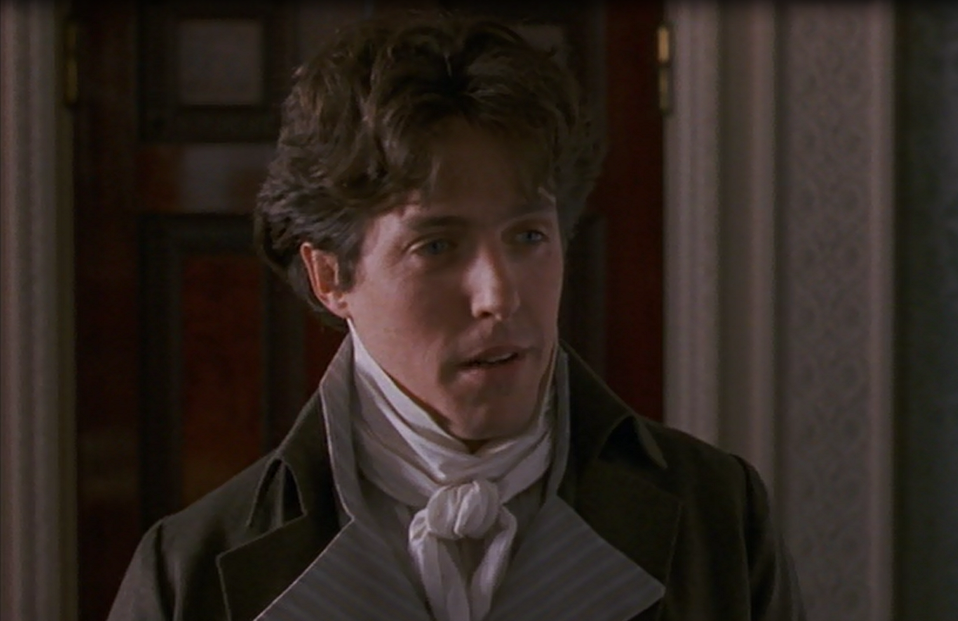
The third film that I included in my own list was "Sense and Sensibility".  This particular version of the film was released in 1995, and was directed by Ang Lee.  It starred Emma Thomson, Kate Winslet, James Fleet, Hugh Grant, and Alan Rickman.  At the death of husband and father, Mr. Dashwood, Mrs. Dashwood and her daughters find themselves in financial straits.  In Georgian England, by law, daughters cannot inherit, and Mr. Dashwood's estate cannot be divided between his son and his wife and daughters (the impression is given that Mrs Dashwood is Mr. Dashwood's second wife [or at least, a wife succeeding his eldest son's mother] and that the inheriting son is from the previous wife).  With the residence being claimed by the eldest son and his wife, Mrs. Dashwood and her daughters must find somewhere else to live.  Taking advantage of a timely offer of alternative residence, Mrs. Dashwood and her daughters must contend with the well-meaning but indiscrete Sir John Middleton and his mother-in-law, Mrs. Jennings.  In the course of acquainting themselves with the ambient society, the two eldest daughters encounter prospective suitors who's situations are more complicated than they first appear.   

One of my favorite things about this film is the pastoral feel it has.  This was one of the qualities that made this film a pleasure to watch.  Another was the way you found yourself caught up in the characters.  All of them seemed to provoke what one might consider to be a rather profound reaction respective to each of the characters and what they were like.  For myself, whatever feelings I developed for the characters, good or bad, were rather strong and engaging.  Their personalities seemed pronounced.  For example, Elinor Dashwood, though quite level-headed, practical and disciplined, was what I would call compassionate to a fault.  She always seemed to put everyone else's welfare before her own.  And she gave everyone the benefit of the doubt.  But, not to the point of denial.  She had the clarity to see what was really in front of her and not what she or others might have wanted to see.  I found myself feeling for her as she accepted the impossibility of a relationship and life with her sister-in-law's brother, Edward, who had pretty much endeared himself to Mrs. Dashwood and all three of her daughters and become the object of Elinor's affections.  Elinor was the family planner and organizer.  She, very effectively, ran the household for her mother and sisters. 

Then, there was Edward Ferrars.  I liked him instantly.  When Fannie, his sister, made an excellent show of just how inconsiderate she was by asking Mrs. Dashwood to move one of her daughters out of their room for the sake of the view, Edward corrected the situation by having himself moved into the guest quarters.  And this, after immediately showing himself sympathetic to the situation Mrs. Dashwood and her daughters found themselves in.  He immediately bonded with the youngest of the Dashwood daughters upon meeting her.  As I mentioned before, Edward thoroughly endeared himself to Mrs. Dashwood and her daughters.  It wasn't long before everyone began to notice the bond that was forming between Edward and Elinor.  Much to Mrs. Dashwood's delight and Fannie's dismay.  Edward was possessed of great integrity, which, unfortunately, would work against their being together. 

Fannie and John Dashwood were not exactly on my favorites list as a couple.  I had some hope for John at first as his initial intention, prompted by his father's dying wish, was to render significant aid to Mrs. Dashwood and her daughters.  But, his wife, Fannie, skillfully and successfully talked him down from his offer and nearly convinced him that he would be justified in seeking remuneration from them.  Fannie, on the other hand, drew contempt from me almost instantly.  Her profound lack of compassion and her sickening sense of superiority almost turned me sideways.  While her outward behavior was possessed of the generally expected and accepted graces exhibited by the ladies of Georgian English society, her disdain for those possessed of less wealth than herself and her self-justified snobbery simply gushed from her like sludge from a flooded sewer drain.  I found no redeeming qualities in her at all. 


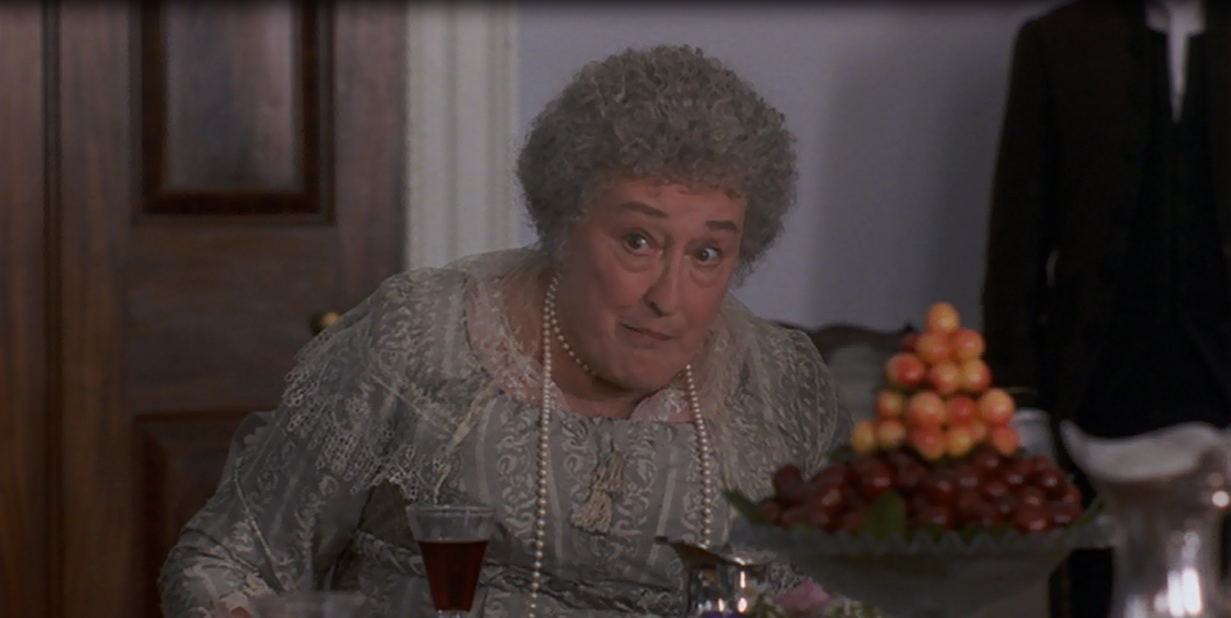
Sir John Middleton and his mother-in-law, Mrs. Jennings, were charming enough despite their respective lack of tact.  Though they were rather tact and discretion challenged, I found them particularly amusing.  They were very generous at heart and well-meaning.  Sir John was a generally pleasant fellow and seemed to be a very good conversationalist.  The only shortcoming I found in him was his lack of discretion.  As much as I liked him, I found myself cringing from time to time at the things he would bring up, seemingly out no where, in conversation.  Mrs. Jennings was also rather kind and well-meaning.  She was quite nosey and a bit of a meddler, but she was quick to help and comfort when and where ever she could.  She too, like Sir John, was very amusing.  Both of them so much so, in fact, that it was quite easy to overlook their social flaws.  I kind of got the impression that they were somewhat aware of their social flaws, but just didn't care. 


Col. Christopher Brandon was a character I found myself relating to a bit more than any of the others.  Upon first laying eyes on Marianne Dashwood, he was smitten.  But he understood that in the eyes of ambient society, to say nothing of the eyes of Marianne, he was considered to be something of an older man, by all appearances just shy of middle-aged.  I thought he was a pleasant fellow but very reserved and serious.  Col. Brandon had a past that he was not particularly proud of, though, from what I could tell there was nothing in it of which he himself should've been ashamed.  Nevertheless, Col. Brandon saw himself as someone that Marianne should have only as a casual acquaintance.  Though quickly developed, his feelings for Marianne seemed quite genuine and his only wish for her was her happiness.  And, he would see her happy regardless of the circumstances of that happiness.  He didn't care that he could never be an active part of it.  He could accept that, as long as he knew she was happy.  Nowhere in this film was Col. Brandon's love for Marianne more evident than when she fell ill.  His fear for her life and sense of helplessness nearly consumed him.  In the course of caring for Marianne in her illness, Elinor stumbles upon Col. Brandon outside the bedroom door.  Seemingly overwhelmed with fear and anxiety, he asks what he can do.  As she tells him that he's already done so much for them, he just about cuts her off with what has become my favorite line in the whole movie.  "Give me an occupation Miss Dashwood, or I shall run mad." 


Marianne Dashwood had her own ideas about what love should be like and who would make the ideal candidate for that love.  She was an avid believer in burning passion.  She was of the opinion that any love worth having should be unbridled and careless of propriety.  And, she believed in living up to that ideal.  At least, for herself anyway.  She found that ideal met in the form of John Willoughby.  Having scooped her up and carried her in his arms all the way back home from a fall suffered on an inadvisable stroll in the rain, Mr. Willoughby found himself endeared to Mrs. Dashwood and all of her daughters.  Marianne fell for him instantly.  Being much in each other's company, Marianne Dashwood and John Willoughby seemed very much like a deliriously happy couple.  However, by virtue of a dubious turn of events, it turns out that, to all except for Marianne, Mr. Willoughby is not quite the charming young man everyone is at first led to believe.  This is revealed in some detail when Mr. Willoughby's past behavior indirectly crosses the path of Col. Brandon. 


There were other contributing characters to the story with somewhat less involvement that were just as engaging as those around whom the greater majority of the film is centered.  Miss Lucy Steele, for example, who is a significant part of Edward Ferrar's past and, who, despite her apparent charm, turns out to be something of a schemer.  Mr. and Mrs. Palmer, daughter and son-in-law to Mrs. Jennings, were a bit comical in their own way both as a couple and as individuals.  As a couple they were exact opposites of each other.  She was annoyingly, incessantly, chipper and chatty.  He was sullen, moody, and a man of few, unpleasant words.  And then there was Robert Ferrars.  If you thought Fannie was a snob, you were in for a real treat with this guy.  If you looked up "snob" in the dictionary, you'd see this guy.  As a matter of fact, from all that is revealed about them, the only redeeming quality about the entire Ferrars family is Edward.


The pleasant reverses and lessons learned make this film one worth seeing in a state of mind that might involve the end of one's life.  I would put this in the category of an escape movie as this is definitely something that would take one's mind off of one's troubles for a couple of hours.  As for the aforementioned state of mind, for myself personally, I might find enough enjoyment in this movie to change my disposition.  I would recommend this film to just about anyone.  If you enjoy a good story with engaging characters, this will definitely serve to take the edge off.


Wednesday, February 20, 2013

Movies You Should Watch Before Suicide: Pride and Prejudice


While I was on a frequented website, I came across a list of films that were described as movies that one would want to see before committing suicide.  It wasn't really about committing suicide or anything of the sort.  It was just a really emphatic way of describing what you might call a "movie bucket list".  This was just a list of what was, in the opinion of the author of the list, some really, really good movies that you really should see, presumably before leaving this life.  Now, with so grave (no pun intended) and expressive a list of films, for myself, I had to narrow down the list a bit.  The list featured 692 titles.  (I like movies as much as the next person, but, I don't have quite that many favorites.  In fact, I'm not sure if I've actually seen 692 movies.) 

Being the "over thinker" that I am, and having the predilection for the strange and unusual that I do, I actually put to myself the question: "What movies would I like to see if I were contemplating ending my life?"  Asking myself this question, I set about the task of narrowing the list.  The second film from this list that I chose was "Pride and Prejudice". 

The film "Pride and Prejudice" was released in 2005, and directed by Joe Wright.  The film starred Keira Knightley, Talulah Riley, Rosamund Pike, Jena Malone, Carey Mulligan, Donald Sutherland, Matthew Macfadyen, and Brenda Blethyn.  The focus of this story is young Elizabeth Bennet, a strong-willed, vibrant young woman living in the caste driven society of Georgian England.  The second of five daughters born to a lower class family, she must contend with a mother who's singular obsession is to marry off all of her daughters.  With her own rather well developed opinions about men and love, she finds herself feeling justified in her beliefs when she meets Mr. Darcy, a man governed by traditional prejudices held by the wealthy of Georgian English society, and the wealthy best friend of the visiting Mr. Bingley, a man of apparently moderate wealth himself.  But, things become complicated when Elizabeth's older sister, Jane, falls in love with Mr. Bingley, a turn of events which brings her into further contact with Mr. Darcy.  In the course of her encounters with Mr. Darcy, she discovers that her understanding of men and love is not as accurate as she first believed.  In fact, all that she believed about Mr. Darcy wasn't entirely accurate.  She slowly discovers that there is more to Mr. Darcy than what she concluded from her first impression.  And so does her heart.    

"Pride and Prejudice" is a film that I would classify as an "escape" movie.  Though it's a story that takes place in the setting of a caste driven society, as this particular version of the film portrays it, there is a level of innocence shown here that, compared with life as we know it, whether in history or the present, seems almost surreal.  The way the characters interact with each other, the traditional courtesies, and the language that everyone uses all have an elegance about them that fascinates me.  In the film, one of the Bennet daughters, Mary, made what amounted to an out-of-place comment and drew from Elizabeth the most elegant way to tell someone to shut up that I've ever heard.  It was awesome.

I don't know about anyone else, but I was kind of caught up in the characters and how they interacted with each other.  I mean, even when they were angry with each other, the exchanges were elegant, eloquent and passionate.  Everyone seemed so straightforword and uncomplicated in their feeling and expression.  I was entranced.  It just sucked me right in.  It made me forget about everything around me.  I was somewhere else for the duration of the film.  This film did far more than take the edge off.  It created (or helped me create) a place free of the dysfunction and complication that is normally found in life.  Not a perfect world and not with perfect people in it, but, one where those things that are not perfect are expressed and dealt with in a far more elegant fashion than what is experienced in everyday life.  The characters were just as engaging as the story. 

Pretty much all of the major characters had "a little something" for me.  And they all served well to engage me in the story.  (I'm sure this is owed just as much, if not more so, to the actors and actresses as it is to the story itself.)  Elizabeth Bennet, though strong-willed and a bit opinionated, was what I would call something of a refreshing character.  Considering the men that she had to interact with in her "limited experience", it's easy to see why she felt the way she did about them.  A great many of them were exactly as she saw them.  Such behavior was typical of the culture and tradition of the time.  But in spite of all this, for the greater majority of the time (and in spite of her encounters) she managed to maintain a relatively cheerful demeanor, which I couldn't help but find refreshing.  I usually don't care much for stubborn, opinionated women (in movies), but, I couldn't help liking her. 

Her sister, Jane, the beautiful one, was the kind of girl a lot of guys dream about (character, time period, culture, and society notwithstanding).  She wasn't vain.  And she wasn't stuck-up because of her beauty.  In fact, she payed little attention to it.  She was apt to think well of everyone, almost to the point of naivete, and was quick to give everyone the benefit of the doubt.  But, she still had the capacity to see what was right in front of her.  She wasn't plagued by denial, and she had a great capacity for common sense.  And she was cordial to a fault.  Like I said, the girl a lot of guys dream about. 

Mary Bennet, one of the younger sisters, pragmatic, and socially awkward, was what would probably be considered something of a nerd today.  She enjoyed reading and intelligent conversation more than the typical diversions of the time.  She hated the typical form of social gathering of the time, the ball, and didn't think much of dancing, though she did practice playing the piano a lot.  In fact, in her own way, she was something of a closet rebel with respect to the customs and preferences of the society she lived in.  But, perhaps more so its preferences than its customs.  Those customs that were founded in the practical and common sense she seemed open to.  Despite her social awkwardness, she was more mature than Kitty and Lydia.   

Kitty and Lydia Bennet, the youngest of the five, are typical in their behavior for girls of their age.  Both very immature, one following behind the other, without a single care in the world except how they can best attract the attention of young men.  Mischievous and giddy, they thought nothing of making themselves a source of embarrassment to the family.  Though pretty much devoid of malice, they were almost totally self-centered, oblivious to all but there own interests.  Pretty much what you might expect of young girls spoiled by their mother. 

Mr. and Mrs. Bennet were what I would call a couple possessed of their own variety of charm.  Mrs. Bennet, in a number of ways, was almost as immature as her two youngest daughters, whom she spoiled and indulged in their behavior.  She was absolutely obssessed with marrying off her daughters as quickly as possible.  It seemed to consume her every waking thought and moment.  And, she was particularly skillful at engineering meetings between her daughters and prospective suitors.  Mr. Bennet was a character that I wouldn't mind emulating.  Most people that I know would find the way his wife pestered him about marrying off their daughters and went on and on about her nerves and how stressed out she was about finding husbands for them rather annoying.  But, I found the character of Mr. Bennet to be layed back and quite easy going in the way he related to his family.  I especially liked the way he related to his wife.  The way she followed him around getting on him about doing this or that would have annoyed anyone else I know.  But, not only did he not get annoyed, but he handled her (and his daughters) with ease and charm.  Every answer came with a genuine smile.  And, in this, you could see he was genuinely happy.  He truly loved and enjoyed his family with a calm humor.  To say nothing of his precious "Lizzy", his favorite, Elizabeth.  I thought this guy was awesome. 

Mr. Darcy and Mr. Bingley seemed to me like character opposites.  But, at the same time they seemed to make good friends.  Bingley seemed like a nice enough guy, affable to everyone he met.   But the thing that bothered me about him was that he was so easily led.  That feature about him proved to be a hindrance when it came to his pursuit of Jane.  His sister, piece of work that she was, was easily able to curtail his pursuit of Jane with very little effort.  What redeemed Bingley to me was the fact that his love for Jane was strong enough to eclipse his sister's influence on him.  Darcy was influenced and governed by the prejudices of his society.  He is described in the movie as "proud and unpleasant".  And it showed in the way he interacted with everyone around him.  He behaved the way he did because he thought that the traditions that he lived by were right.  What I thought was a redeeming quality about him was that he was open enough to learn the error of the ways he was born and raised to.  I also rather liked that it was his love for and interaction with Elizabeth that showed him what was wrong with the way he was. 

Caroline Bingley was the object of my contempt.  Beautiful as she was, I couldn't stand her.  I felt like cringing every time she opened her mouth.  If you looked up the phrase "stuck up", her picture would be there.  She seemed to bask and bathe in the air of her "superiority".  What's more, she seemed to enjoy using sarcasm to rub everyone's face in what she saw as their own shortcomings.  That woman made my flesh crawl. 

And on the opposite end of the spectrum was Charlotte Lucas, Elizabeth's closest friend.  I liked her.  I thought she was really sweet.  She struck me as very level-headed and practical.  She seemed rather wise as well.  The thing that impressed me the most about her was that, being married to a man out of practicality rather than love, she was devoted to him and to the life that he provided for her.  She found her own happiness in that life and happily allied herself to her husband's interests.  Her husband, Mr. Collins (played by Tom Hollander) was something of the comic relief.  Despite his being the heir of the property that the Bennet family lived on, he was looked down on by pretty much everyone.  Charlotte devoted herself and supported him nontheless. 

"Pride and Prejudice" is an excellent story of how caste founded prejudices are overcome by love between two people on opposite sides of social lines.  The environment in which this story takes place is one that, by virtue of history, is a significant diversion from the one we live in in the present.  This is definitely a film that will take one's mind off of what's troubling them for a couple of hours.  This particular make of the film was something of a pastoral experience.  I saw the make of this film from 1940 starring Greer Garson and Laurence Olivier.  It was a good watch, but, I found the 2005 version a lot more enjoyable because the pastoral quality about the film appealed to me.  With reference to the idea of seeing this movie before I part this life, suicide as a means being mentioned in the title of the original list, the escape that this movie provides might placate me enough to change my mind.  (If it didn't, I would go out feeling a lot better than did before I saw it.) 

Sunday, December 16, 2012

"What If" Movies

In my limited view of things I've noticed, over time, a variety of movies that, though existing in rather small numbers, are what I would call a great answer to that wonderful variety of juvenile conversation that never seems to get old.  I don't know if there's actually a proper name for them and I haven't met anyone who's given them any kind of nickname.  What I do know is that, when I find myself in one (like I did when I was a kid), I can never seem to get enough of it.  Much to my amusement and gratification, there are a few movies that paint very entertaining pictures of the kind of questions and suppositions that I and the friends of my childhood used to love to debate about in our collective daydreams. 

For the sake of identification, I'll call them "what if" movies.  They both ask and answer the kinds of questions and comparisons that come up in these kinds of conversation.  "'What if'" this character and that character were to fight each other?"  "Who do you think would win?"  "'What if'" this character and that character were to team up?" . . . and on and on.  Since I was a kid, and all the way up to now, I've been joyfully indulging in conversations and comparisons of this kind about comicbook and literary characters, movies and TV shows.  I do realize that the producers and directors of the these films, most likely, didn't make them for the purpose of addressing these gratifying daydreams, but, perhaps without trying, they did a pretty good job of it. 

Over the past 30 years there have been a few films, that are personal favorites of mine, which fit quite nicely into the category of "what if".  The first of these films to draw my attention to the "what if" quality that I would begin to notice was Disney's "Tron". 

"What if" . . . a man was somehow pulled in and trapped inside a computer.  (Not just the device, but the program environment itself.)  I know.  It sounds like a geeky question.  But, geeky or not, it made for a good movie. 

Walt Disney's "Tron" was released in 1982.  The film starred Jeff Bridges, Bruce Boxleitner, David Warner, Cindy Morgan, and Barnard Hughes.  A talented computer programmer, Kevin Flynn, employed at a large successful software firm produces a number of highly marketable video games in his spare time only to have them stolen by a rival in the work place.  He is subsequently cheated out of any profit from the games and is fired from the company in an attempt to hide the fraud.  Aided by his friends in his quest to find the evidence that he invented the video games, Flynn finds himself pulled into the computer and forced to fight for his life. 

With the aid of a security program called Tron, Flynn takes on the Master Control Program that's trying to kill him.     


Back when this film came out, I just couldn't get enough of it. 


I saw this movie as often as I could, whenever I could.  I was in school studying computers at the time that this film came out.  Seeing it increased my enthusiasm for the field.  Being what it was at the time that it was, I found the special effects enthralling. 

A number of years later, another movie came out that somewhat mildly qualified as a "what if" film that was equally as enthralling by virtue of both its story and its special effects.  The story had its similarities to Tron's, but the direction was kind of in the opposite direction.   

"'What if' . . . someone/you woke up and discovered that your world was computer generated?" 

Warner Brothers' "The Matrix" had something of a significantly more involved and developed story than Disney's "Tron", if only by virtue of progression of the two sequels that followed.  But, the question is there nontheless.  And the answer that the story provides is down right amazing. 

Warner Brothers' "The Matrix" was released in 1999 and starred Keanu Reeves, Laurence Fishburne, Carrie-Anne Moss, and Hugo Weaving.  A computer hacker encounters a group of fugitives that show him that his world, his reality is not what it appears.  He discovers that he has been existing inside a computer generated world and that his body is being used as a source of power by its creators.   
 
It can be argued that its sequels place it outside the category of a "what if" film, but , I would hold on to that classification for this film just by virtue of how the story unfolds

In 2003, a film was released that screamed "what if".  To this day it holds a place among my most favorite action movies.  It involved a collection of victorian age characters currently well known in literature and film that find themselves teamed up in an effort to save the world. 

"'What if' . . . Allan Quatermain, Captain Nemo, the Invisible Man, Tom Sawyer, Dorian Gray, and Dr. Jekyll/Mr. Hyde were teamed up?  And, just to make it interesting, what if we added someone who had been turned by Dracula, like Mina Harker?  (I guess including the vampire himself would be a little too much.) 

Angry Film's "The League of Extraordinary Gentlemen" was released in 2003 and starred Sean Connery, Naseeruddin Shah, Peta Wilson, Tony Curran, Stuart Townsend, Shane West, Jason Flemyng, and Richard Roxburgh. 
Allan Quatermain leads a team of unique individuals against an arms merchant known as "The Phantom" in an effort to avert a world war. 
 
 
I thought the inclusion of Captain Nemo's Nautilus and what was made another of his chronologically premature technological innovations, the "automobile", was a nice touch. 
 
 
All of these movies were fun to watch.  The special effects, the technology being what they were at the respective times of release, gave just enough of a touch of realism to make them all a great get-away for a couple of hours.