Showing posts with label love story. Show all posts

Tuesday, May 7, 2013

Movies You Should Watch Before Suicide: Memoirs of a Geisha

Some time ago, I saw a list of films under an unusual title.  "Before You Wanna' Commit Suicide, Watch These First" was the title of the list.  Even though suicide wasn't an actual consideration in the composition of the list, being the odd person that I am, I thought it might make for an interesting point of view if I did think about it from the stand point of being just about to "off" myself.  As this is the fourth film that I've taken it upon myself to discuss in the context of that mindset, I won't get into the details of the respective sizes of the original list and my list, or the difference between my taste in films and that of the author of the original list.  I'll also bypass the details of the mindset in which I'm watching these films, and of how I've assembled my list from those featured in the original list.  I've gone over that three times already. 

The film "Memoirs of a Geisha" is based on the book by Arthur Golden and stars Ziyi Zhang, Ken Watanabe, Michelle Yeoh, Koji Yakusho, Youki Kudo, Kaori Momoi, and Gong Li.  A young Japanese girl with eyes "the color of water", Chiyo, and her sister, Satsu, are sold by their father and taken from their home.  They are taken to a geisha house where she is accepted and her sister is not.  While she is taken in, her sister is taken away and sold to a brothel somewhere else in town.  Chiyo starts off working as a servant in the geisha house.  Later, it is decided that she is to be educated to become a geisha.  But, Chiyo is determined to find her sister at any cost.  Having found out the whereabouts of her sister, she meets with her and they plan to run away together.  But they are forced to wait and meet at a bridge outside of the town district.  But Chiyo suffers a fall from a roof top in her attempt to make it to their rendezvous.  Failing to make it to the bridge, she is left behind by her sister.  To pay off the debt for her care after her fall, she is forced to work as a slave until, one spring day, she meets a man who shows her kindness and becomes the purpose for which she lives. 

I was hooked from the moment the movie began.  I couldn't help but sympathize with Chiyo in what she went through when she was taken from her home, and even more at seeing her anguish at being separated from her sister.  Then, just when you think things couldn't get much darker, she's forced to endure the cruelty of the resident geisha Hatsumomo.  This woman is angry and merciless.  She wastes no time in making life even more difficult for Chiyo.  She is as spiteful as she is beautiful.  And, she takes every opportunity that she can to make Chiyo miserable, insulting and humiliating her at every available turn.  Hatsumomo's grace, talent, and skill afford her royal treatment as she is the principle earner in the geisha house.  The only friend that Chiyo has is the other young girl she met when she was first brought to the geisha house, named Pumpkin.  She and Chiyo watch out for each other all through their younger years. 

Early on it is decided that Chiyo will be educated in preparation to become a geisha.  This is the first bright point in Chiyo's life at the geisha house.  But, is doesn't last long.  She becomes the victim of Hatsumomo's manipulation and ends up being punished for an act that she was put up to.  She quietly endures the punishment to honor a vow she took to Hatsumomo in exchange for information on her sister's whereabouts.  Seeing this as her only hope of escaping the despair that is her life, she finds her sister and plans to run away with her.  On the following night, however, in an attempt to escape from the geisha house, Chiyo falls from a roof and injures herself.  With this injury she is mercilessly plunged back into despair with the loss of her opportunity for education, the news of her parents' deaths, and being abandoned by her sister.  At this point, she is all alone in the world, and forced to work as a slave to pay off the cost of her medical treatment after the fall. 

Finally, one spring day, as she sat on a bridge, steeped in her despair in contemplation of a dark future, she hears the voice of a stranger offering encouragement and kindness.  She turns to see the owner of the voice is a wealthy businessman, a "Chairman" as she comes to remember him, with two geisha at his side.  Complimenting her on the beauty of her eyes, he offers her a gift cherry ice, desiring only her smile as gift in return.  Leaving her with enough money to feed her for a month, pocket change to him, he took her heart with him.  From that moment, her every effort was to become a part of his world.  He became the center of her hope and the motivation for her life. 

Years later, the geisha house is unexpectedly visited by Mameha, a most respected geisha.  She enters into a wager with "Mother", who ran the geisha house.  The wager was such that if she took Chiyo under her wing, she would turn a sizable profit or pay double for Chiyo's expenses and education.  The wager being accepted, Chiyo begins her transformation from geisha house slave to geisha.  From this point in the movie on, you see almost plain, kowtowing Chiyo slowly transform into the graceful and enchanting Sayuri.  (Ziyi Zhang, the older Chiyo, is an exquisite beauty anyway.  Trying to make her look plain, in my humble opinion, is something of an impossibility.)  Mameha shares all of her wisdom and experience and trains her in all of the subtle nuances of a superior geisha's comportment. 

It was the "master" training the "student".  In this film I saw a woman who understood, by virtue of her own experience, the true power of a woman's beauty giving instruction to another who possessed a truly superior beauty.  But, it wasn't just about training Chiyo.  It was about a competition with Hatsumomo.  Mameha and Hatsumomo were great rivals.  And, Hatsumomo had taken Pumpkin under her wing to train her to become a geisha.  Between Mameha and Hatsumomo, it was about who would produce the better geisha.  And Hatsumomo played dirty. 


There were three moments in this film that stood out to me.  The first was the test of Chiyo's training.  On the street, Chiyo had asked Mameha about the ability to stop a man in his tracks with a single glance.  Chiyo was skeptical as to whether it was really possible.  Mameha asked her to choose someone out for her to
demonstrate.  With Chiyo's choice, she effortlessly demonstrated, not only that it was possible, but that she could do it quite well.  Then, Mameha chose someone for Chiyo to try.  The resulting mayhem from Chiyo's breathtaking success was both amusing and inspiring.  It was awesome.  She never even looked back to see the chaos unfolding behind her that resulted from the power of her single glance.  She just walked away with a soft triumphant smile.  As Mameha joined her, she told her, "You are ready."  I was like, "Wow.  Just, wow."  The next was after Chiyo had been given the name Sayuri.  It was her introduction into society.  Just before she was to leave, after she was finished dressing, on the way out she passed a mirror.  It was the look on her face when she saw herself as the geisha she had gone through so much to become.  The moment was humorously interrupted by Mother's voice saying, "Hurry up!  You're not making any money standing there gawking at yourself."  It caught me by surprise and made me laugh.  Finally, there was the dance that she did as the lead in a performance featuring the geishas in training.  It was just like Mameha said she would be just before she took the stage.  She was glorious.  In the film, all who watched her were transfixed.  They couldn't take their eyes off of her. 

In this film, you experience every part of Chiyo's pain, loss, and despair.  As she is trained, becomes Sayuri and is brought face to face with the stark realities of a geisha's life, you experience her pain and her triumph.  And then there's the tenacity of her desire to be a part of "the Chairman's" life.  I could watch this film over and over and over again.  (And I probably will.)  I would recommend this film to just about anyone. 

I would consider this an "inspirational" movie.  A captivating "triumph through adversity" film.  And, considering this film in the context of the above mentioned mindset, I would consider it a worthy experience, as films go, to take its place among the "last things I'd like to experience before I end my existence in this world".  As a matter of fact, this film could be something that might make me change my mind.  The depth of Chiyo's despair and the level of triumph she experienced just might be enough to convince me to try continuing on in this world.  Anyway, in the spirit in which the list was actually meant, I would recommend this as a top rater for anyone's "movie bucket list".

Monday, March 18, 2013

Movies You Should Watch Before Suicide: Sense and Sensibility

A little while ago I came across a list of films that were identified as "movies that should be seen before you commit suicide" (or something like that).  That wasn't the exact title of the list, but that was something of the idea.  It didn't really involve suicide or anything like that.  It was just a really unusual title for what amounts to a "movie bucket list".  I didn't see every film on the list, but, from what I could gather of the films on the list that I did see, it really was a list of particularly good movies. 

The author of this list really caught my attention with its title.  And, being the odd fellow that I am, I actually gave it some thought.  I mean, just as the title suggested, I thought about what movies I'd want to see before ending my own life.  (Those who've known me best know taking a title like that seriously would be just the kind of thing I'd do.)  I thought to myself, "If I were serious enough to want to end my own life, what movies would I want to see?"  There were 692 titles on the list.  Of all the films that I have seen, and of all those that I consider "favorites", there aren't 692 movies.  So, I had to narrow the list down.  Significantly.  Even of my favorites, there are only so many that I would give that serious a level of consideration.  Needless to say, my list is considerably smaller. 

The third film that I included in my own list was "Sense and Sensibility".  This particular version of the film was released in 1995, and was directed by Ang Lee.  It starred Emma Thomson, Kate Winslet, James Fleet, Hugh Grant, and Alan Rickman.  At the death of husband and father, Mr. Dashwood, Mrs. Dashwood and her daughters find themselves in financial straits.  In Georgian England, by law, daughters cannot inherit, and Mr. Dashwood's estate cannot be divided between his son and his wife and daughters (the impression is given that Mrs Dashwood is Mr. Dashwood's second wife [or at least, a wife succeeding his eldest son's mother] and that the inheriting son is from the previous wife).  With the residence being claimed by the eldest son and his wife, Mrs. Dashwood and her daughters must find somewhere else to live.  Taking advantage of a timely offer of alternative residence, Mrs. Dashwood and her daughters must contend with the well-meaning but indiscrete Sir John Middleton and his mother-in-law, Mrs. Jennings.  In the course of acquainting themselves with the ambient society, the two eldest daughters encounter prospective suitors who's situations are more complicated than they first appear.   

One of my favorite things about this film is the pastoral feel it has.  This was one of the qualities that made this film a pleasure to watch.  Another was the way you found yourself caught up in the characters.  All of them seemed to provoke what one might consider to be a rather profound reaction respective to each of the characters and what they were like.  For myself, whatever feelings I developed for the characters, good or bad, were rather strong and engaging.  Their personalities seemed pronounced.  For example, Elinor Dashwood, though quite level-headed, practical and disciplined, was what I would call compassionate to a fault.  She always seemed to put everyone else's welfare before her own.  And she gave everyone the benefit of the doubt.  But, not to the point of denial.  She had the clarity to see what was really in front of her and not what she or others might have wanted to see.  I found myself feeling for her as she accepted the impossibility of a relationship and life with her sister-in-law's brother, Edward, who had pretty much endeared himself to Mrs. Dashwood and all three of her daughters and become the object of Elinor's affections.  Elinor was the family planner and organizer.  She, very effectively, ran the household for her mother and sisters. 

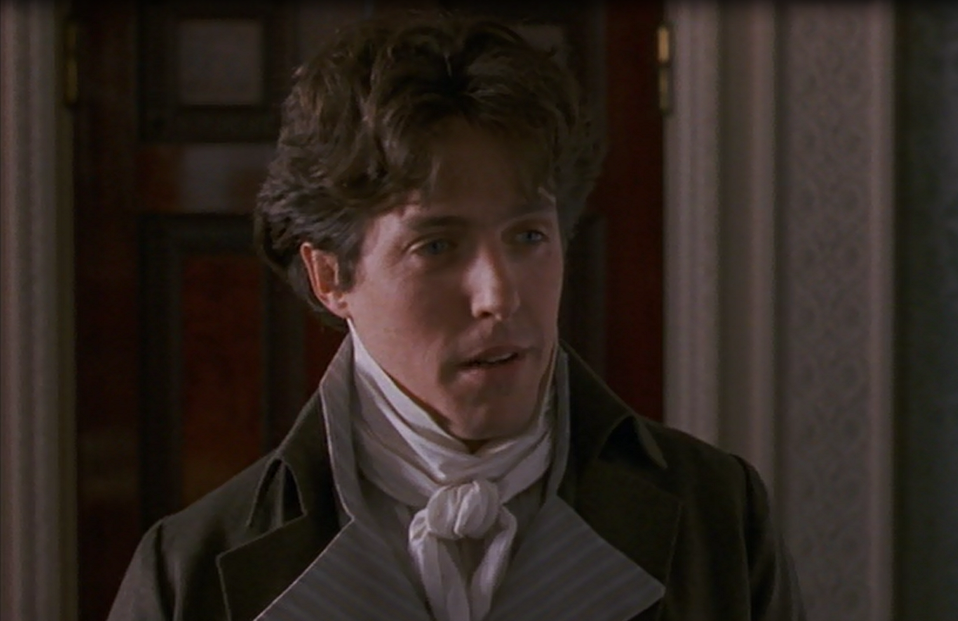
Then, there was Edward Ferrars.  I liked him instantly.  When Fannie, his sister, made an excellent show of just how inconsiderate she was by asking Mrs. Dashwood to move one of her daughters out of their room for the sake of the view, Edward corrected the situation by having himself moved into the guest quarters.  And this, after immediately showing himself sympathetic to the situation Mrs. Dashwood and her daughters found themselves in.  He immediately bonded with the youngest of the Dashwood daughters upon meeting her.  As I mentioned before, Edward thoroughly endeared himself to Mrs. Dashwood and her daughters.  It wasn't long before everyone began to notice the bond that was forming between Edward and Elinor.  Much to Mrs. Dashwood's delight and Fannie's dismay.  Edward was possessed of great integrity, which, unfortunately, would work against their being together. 

Fannie and John Dashwood were not exactly on my favorites list as a couple.  I had some hope for John at first as his initial intention, prompted by his father's dying wish, was to render significant aid to Mrs. Dashwood and her daughters.  But, his wife, Fannie, skillfully and successfully talked him down from his offer and nearly convinced him that he would be justified in seeking remuneration from them.  Fannie, on the other hand, drew contempt from me almost instantly.  Her profound lack of compassion and her sickening sense of superiority almost turned me sideways.  While her outward behavior was possessed of the generally expected and accepted graces exhibited by the ladies of Georgian English society, her disdain for those possessed of less wealth than herself and her self-justified snobbery simply gushed from her like sludge from a flooded sewer drain.  I found no redeeming qualities in her at all. 


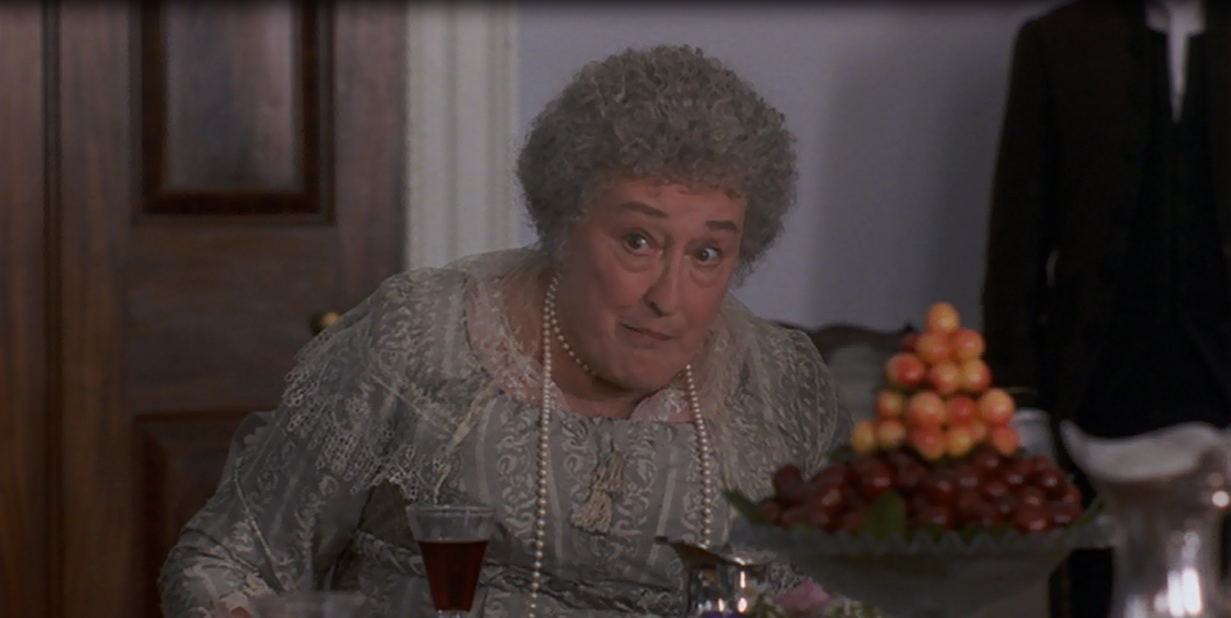
Sir John Middleton and his mother-in-law, Mrs. Jennings, were charming enough despite their respective lack of tact.  Though they were rather tact and discretion challenged, I found them particularly amusing.  They were very generous at heart and well-meaning.  Sir John was a generally pleasant fellow and seemed to be a very good conversationalist.  The only shortcoming I found in him was his lack of discretion.  As much as I liked him, I found myself cringing from time to time at the things he would bring up, seemingly out no where, in conversation.  Mrs. Jennings was also rather kind and well-meaning.  She was quite nosey and a bit of a meddler, but she was quick to help and comfort when and where ever she could.  She too, like Sir John, was very amusing.  Both of them so much so, in fact, that it was quite easy to overlook their social flaws.  I kind of got the impression that they were somewhat aware of their social flaws, but just didn't care. 


Col. Christopher Brandon was a character I found myself relating to a bit more than any of the others.  Upon first laying eyes on Marianne Dashwood, he was smitten.  But he understood that in the eyes of ambient society, to say nothing of the eyes of Marianne, he was considered to be something of an older man, by all appearances just shy of middle-aged.  I thought he was a pleasant fellow but very reserved and serious.  Col. Brandon had a past that he was not particularly proud of, though, from what I could tell there was nothing in it of which he himself should've been ashamed.  Nevertheless, Col. Brandon saw himself as someone that Marianne should have only as a casual acquaintance.  Though quickly developed, his feelings for Marianne seemed quite genuine and his only wish for her was her happiness.  And, he would see her happy regardless of the circumstances of that happiness.  He didn't care that he could never be an active part of it.  He could accept that, as long as he knew she was happy.  Nowhere in this film was Col. Brandon's love for Marianne more evident than when she fell ill.  His fear for her life and sense of helplessness nearly consumed him.  In the course of caring for Marianne in her illness, Elinor stumbles upon Col. Brandon outside the bedroom door.  Seemingly overwhelmed with fear and anxiety, he asks what he can do.  As she tells him that he's already done so much for them, he just about cuts her off with what has become my favorite line in the whole movie.  "Give me an occupation Miss Dashwood, or I shall run mad." 


Marianne Dashwood had her own ideas about what love should be like and who would make the ideal candidate for that love.  She was an avid believer in burning passion.  She was of the opinion that any love worth having should be unbridled and careless of propriety.  And, she believed in living up to that ideal.  At least, for herself anyway.  She found that ideal met in the form of John Willoughby.  Having scooped her up and carried her in his arms all the way back home from a fall suffered on an inadvisable stroll in the rain, Mr. Willoughby found himself endeared to Mrs. Dashwood and all of her daughters.  Marianne fell for him instantly.  Being much in each other's company, Marianne Dashwood and John Willoughby seemed very much like a deliriously happy couple.  However, by virtue of a dubious turn of events, it turns out that, to all except for Marianne, Mr. Willoughby is not quite the charming young man everyone is at first led to believe.  This is revealed in some detail when Mr. Willoughby's past behavior indirectly crosses the path of Col. Brandon. 


There were other contributing characters to the story with somewhat less involvement that were just as engaging as those around whom the greater majority of the film is centered.  Miss Lucy Steele, for example, who is a significant part of Edward Ferrar's past and, who, despite her apparent charm, turns out to be something of a schemer.  Mr. and Mrs. Palmer, daughter and son-in-law to Mrs. Jennings, were a bit comical in their own way both as a couple and as individuals.  As a couple they were exact opposites of each other.  She was annoyingly, incessantly, chipper and chatty.  He was sullen, moody, and a man of few, unpleasant words.  And then there was Robert Ferrars.  If you thought Fannie was a snob, you were in for a real treat with this guy.  If you looked up "snob" in the dictionary, you'd see this guy.  As a matter of fact, from all that is revealed about them, the only redeeming quality about the entire Ferrars family is Edward.


The pleasant reverses and lessons learned make this film one worth seeing in a state of mind that might involve the end of one's life.  I would put this in the category of an escape movie as this is definitely something that would take one's mind off of one's troubles for a couple of hours.  As for the aforementioned state of mind, for myself personally, I might find enough enjoyment in this movie to change my disposition.  I would recommend this film to just about anyone.  If you enjoy a good story with engaging characters, this will definitely serve to take the edge off.